
Rehydrating and Restoring the Landscape
Rehydrating and Restoring the Landscape:Mulloon Institute, Northern Tablelands Local Land Services and Granite Borders Landcare walk into a bar…
The ISSUE
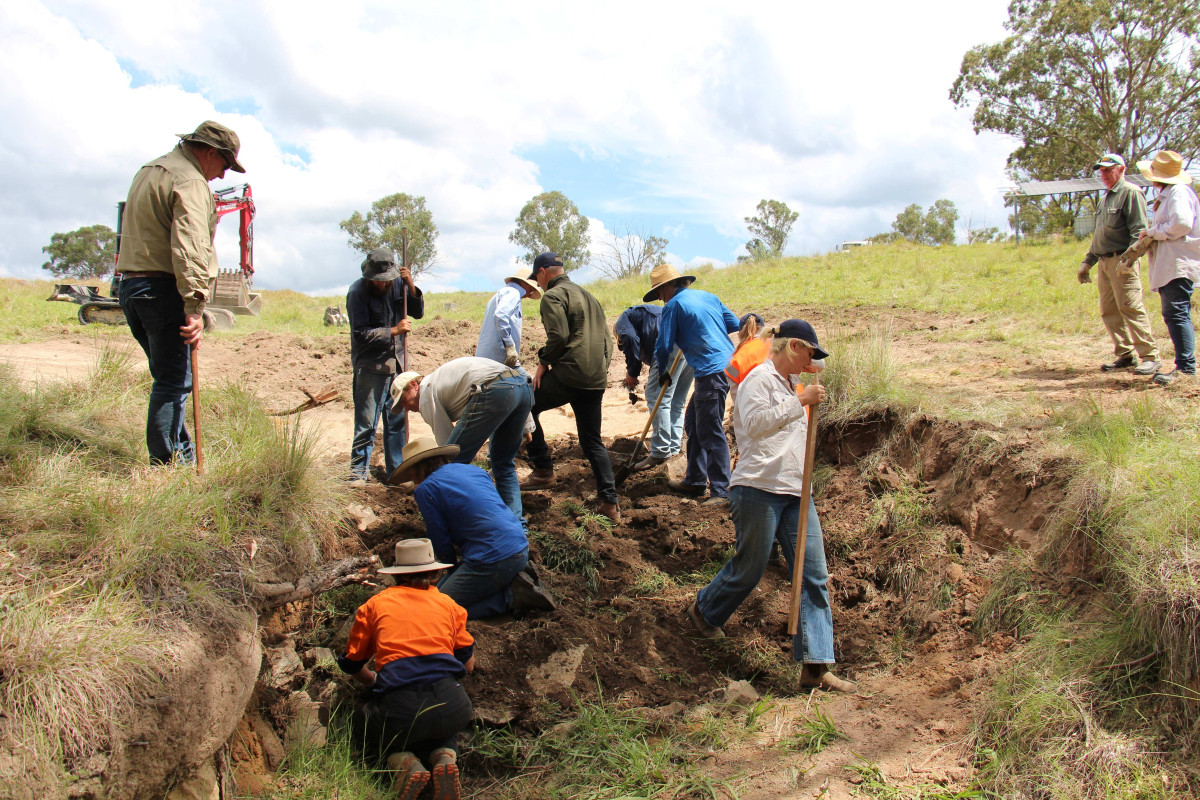
Like many regional communities, Granite Borders region has been impacted by a barrage of unnatural land management practices. This includes over clearing, over grazing, degraded gullies and streams, soil compaction and overload of residual herbicides, pesticides and fungicides. These harmful processes contribute to soil health compromise, a lowered water-table, loss of wetlands (carbon sinks) and biodiversity and lowered agricultural productivity. Dysfunctional landscapes become incapable of utilising hydrological systems to distribute and retain water, the impacts of which have been experienced by our community as extreme drought and bushfires between 2017–2023.
The SOLUTION
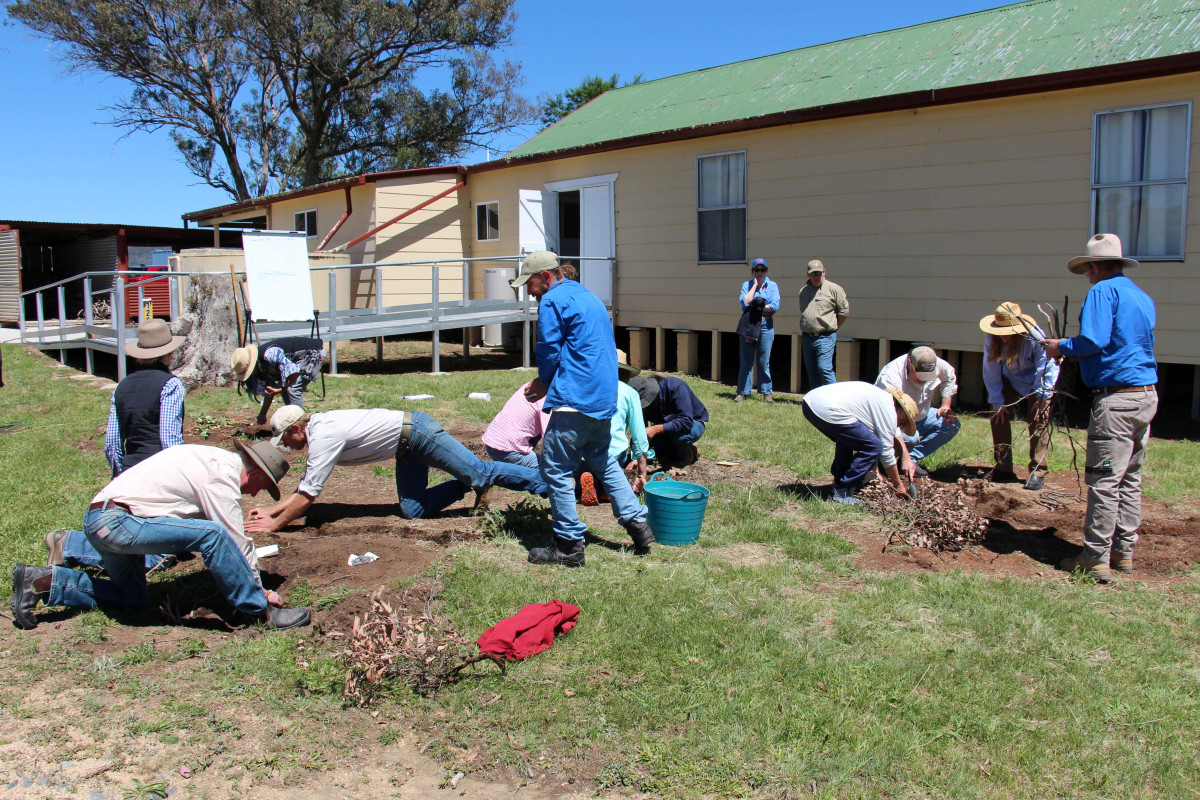
Mulloon Institute, Northern Tablelands Local Land Services and Granite Borders Landcare Committee created a temporary drinking hole for Granite Borders landholders. After an initial scope of landholder interest, the Mulloon Landscape Rehydration Learning Program was subsidised by Northern Tablelands Local Lands Services and arranged so that GBLC could recoup their efforts with minimal cost to participants. Critical to the success of this program was strong rapport between each of the partner organisations, which flowed down to people on the ground, through a structured learning journey including a field day, 3-day bootcamp, then one-on-one property-tailored mentoring.
The IMPACT
The Landscape Rehydration Learning Programs built the capacity of our community to understand and restore water cycles across their properties. Beginning with a Field Day welcoming more than 40 landholders, the program progressively deepened engagement for those ready to take on-ground action. Participants who continued to the Bootcamp gained skills to read and assess water cycle health at property scale and apply practical rehydration strategies to their own farms. Those in the Mentoring Program now stand as living demonstrations of what is possible in the Granite Belt, setting examples of how restoring the water cycle builds more resilient, productive landscapes.
LEARNINGS
Key learning has been building the capacity of local landholders to apply Landscape Rehydration techniques on their own properties, translating knowledge into confident, on-ground action. Participants developed practical skills in slowing, spreading and infiltrating water to reduce surface runoff. Techniques such as increasing surface roughness and slowing the flow restore the landscape's natural capacity to retain and cycle water. Delivered in partnership with Northern Tablelands LLS and Granite Borders Landcare, the program supports landholders in building productive landscapes, resilient in the face of climatic extremes, such as fire and drought. Mulloon Institute, Local Land Services and Granite Borders Landcare walk into a bar, and deep drinking across the landscape results.
Key Facts
Landscape Rehydration
Landholder scaffolding and mentoring support
Local Land Services and key industry organisation networking and rapport
Drought resilience
Workable Fee for Service arrangement
.webp)