
Queensland Landcare Awards - Making room for quolls
The Quoll Society of Australia Inc. is bringing research, landholders and volunteers together to restore wildlife habitat across the Southern Downs. Its next planting project builds on years of practical work in the region.
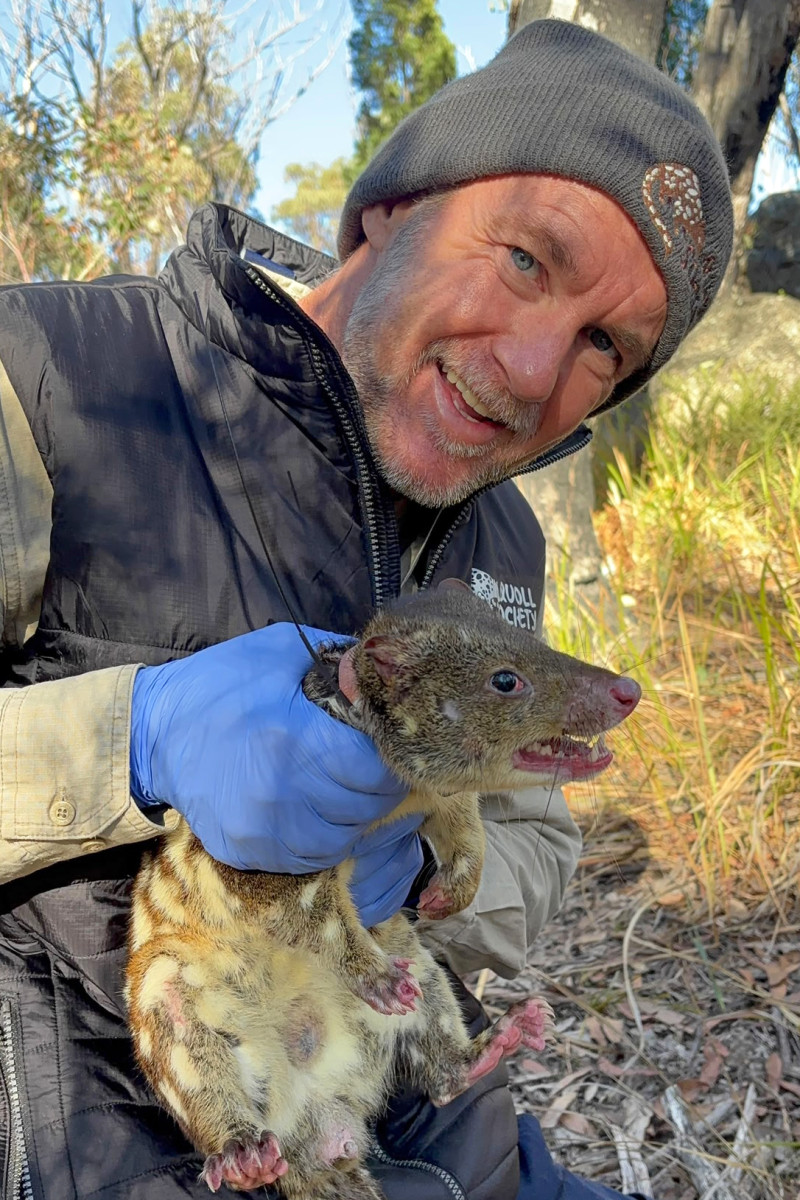
For a spotted-tailed quoll moving through the Southern Downs, a patch of bushland is part of a much bigger landscape. The connections between patches matter: they help wildlife reach the places it needs for food, shelter and movement.
Creating those connections is at the heart of the Quoll Society of Australia Inc.’s work. Through its Stepping Stones programme, the Society works with landholders to plant native vegetation on private properties, helping link habitat across the region.
It is work that brings conservation into the everyday life of farms and rural communities, with researchers, property owners and volunteers each contributing something essential.
Founded in 2017, the Quoll Society combines research, habitat restoration and public education. Founder and President Paul Revie describes an organisation driven by people who want to understand quolls better and put that knowledge to practical use.
Around Girraween National Park, the Society uses GPS and radio tracking to learn where quolls move, where they shelter and which habitats they use. Wildlife cameras provide another way to investigate their presence across the landscape.
That research also raises questions about private land. Protected areas are only part of the picture, and the Society wants to better understand how quolls move onto and between surrounding properties.
“If we can create a network of corridors and stepping stones, we’re really making the whole habitat a lot more suitable for quolls,” Paul said.
Corridors provide links between larger areas of vegetation. Stepping stones are smaller patches that help bridge the gaps. Together, they offer a practical way for individual properties to contribute to a more connected landscape.
The Society’s next funded phase, Quollity Corridors: Stepping Stones in the Southern Downs Phase 2.1, has received $40,301 through the Queensland Government’s Grassroots Environmental Grants, Round 1: Environmental Conservation.
The project aims to establish 3,000 native plants, monitor biodiversity with wildlife cameras and involve landholders and volunteers. Paul expects planting to take place across approximately three to five properties, with spring 2027 provisionally planned for the planting work.
This is the next step in a longer effort. According to Paul, the Society’s earlier Southern Downs programme has planted more than 39,000 trees across 39 properties over four years.
Behind those numbers are conversations with landholders about what they want to achieve and where planting will work best on their properties. Paul says the Society has worked with cattle and sheep producers, wineries and cropping properties, and has been encouraged by landholders approaching it for help to restore vegetation.
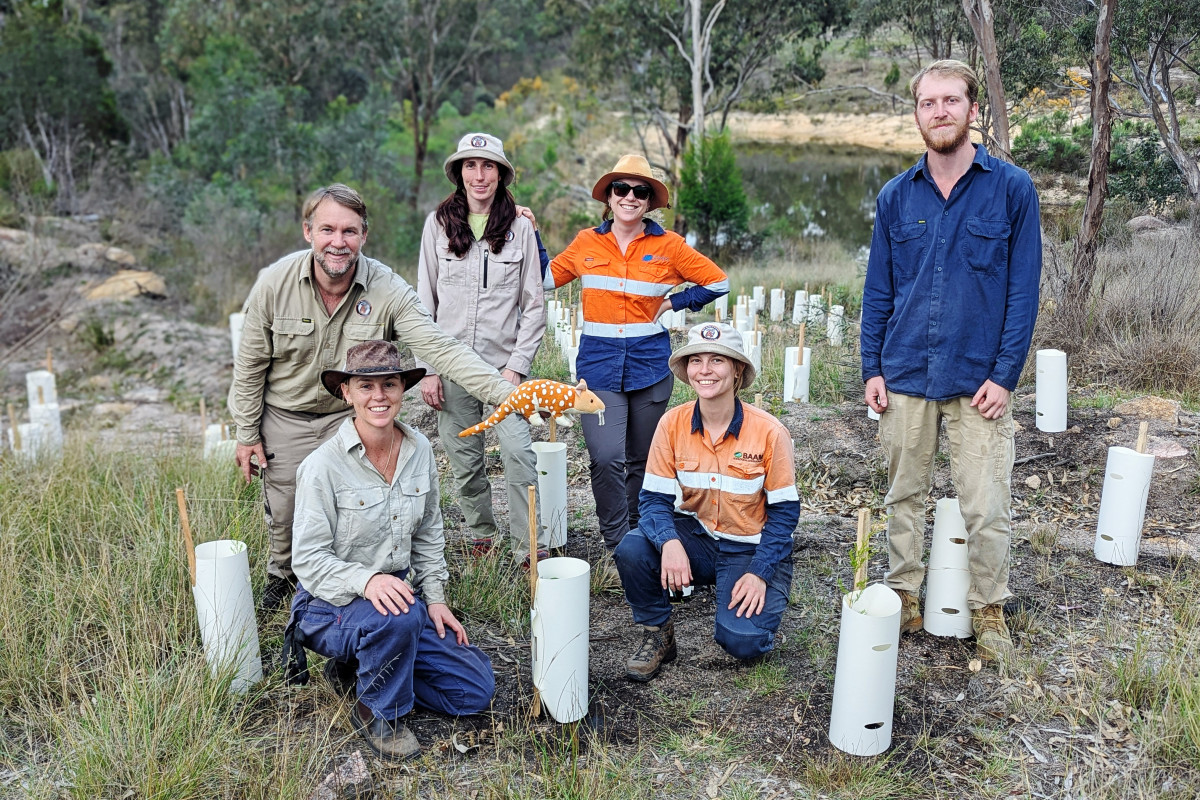
For someone who wants more trees but is unsure where to begin, the Society helps turn that interest into a practical plan. Its team prepares planting areas, including slashing grass and digging holes, before volunteers arrive to plant and fit guards that protect young plants while they establish.
The connection with agriculture extends beyond the planting itself. Spotted-tailed quolls prey on feral rabbits, a familiar pest that eats pasture and crops. Restoring habitat for this native predator gives farmers and landholders another reason to take an interest in quoll conservation.
The wider habitat work also supports other wildlife. Paul reports seeing bush birds using earlier plantings and animals occupying nest boxes installed alongside the restoration work. These are encouraging signs of developing habitat, with the longer-term aim of helping quolls and other wildlife move through the landscape.
People are central to every stage.
“Volunteers are really what makes us tick at the Quoll Society,” Paul said.
Their contributions extend well beyond planting days. Volunteers help place and retrieve cameras, assist with field research, analyse data, support administration and talk to the public at events.
Paul says university students and early-career ecologists can gain valuable field experience and build professional connections through that involvement. For others, it is a chance to contribute their time and skills while joining a community with a shared interest in wildlife.
Landholders can also help the Society build its understanding of the region by reporting quoll sightings or enquiring about camera monitoring and habitat planting. Information about volunteering and a quoll sighting report form are available at quollsociety.org.
The Society’s work is one example of the sustained regional effort that the community will celebrate at the Queensland Landcare Awards gathering in Stanthorpe on Saturday 10 October 2026.
Hosted by Granite Borders Landcare Inc., the gathering will bring landholders, volunteers and community members together at Varias, 22 Caves Road, linking the local celebration with the statewide awards ceremony.
It is an opportunity to recognise the people behind projects like this: those who carry out research, offer land for habitat restoration, prepare planting sites and keep returning to help young landscapes grow.
Arrival is from 10 am, with the ceremony from 11 am to 12.30 pm, Queensland time. Attendance is free and registration is essential. Visit qwalc.org.au, follow the Queensland Landcare Awards registration link and select Stanthorpe General Admission.